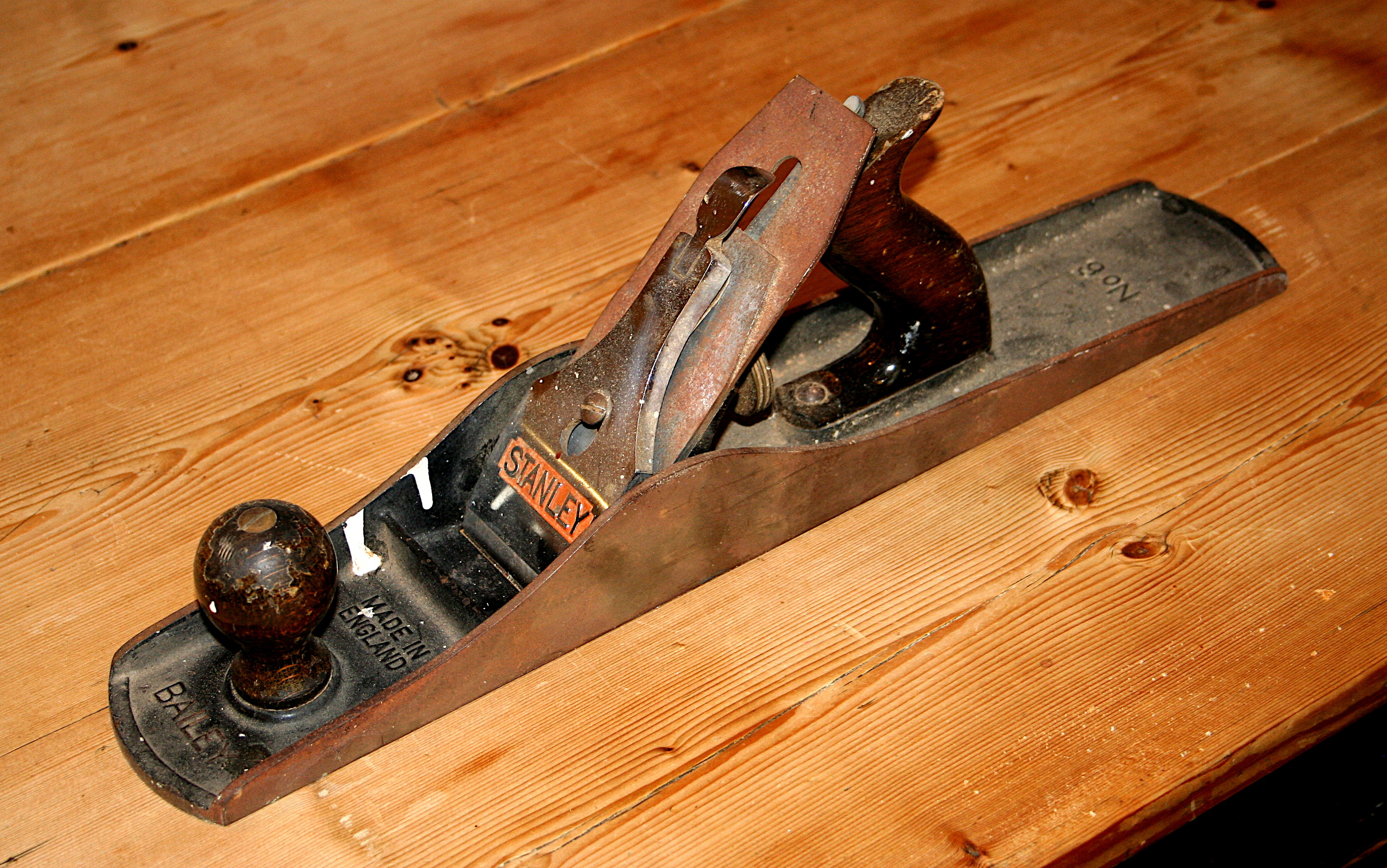
The bench plane is the tool most associated with Canadian hand-tool woodworking. In workshops from Newfoundland to British Columbia, a well-tuned No. 4 or No. 5 is the starting point for surfacing rough lumber before it touches a saw. What gets less attention is how those planes are actually built — the metallurgical decisions, casting geometry, and manual fitting that separate a working tool from a shelf decoration.
Body Casting and Grey Iron
Most production bench planes are cast from grey iron — a class of cast iron in which graphite precipitates as irregular flakes within the iron matrix during solidification. Grey iron machines readily, absorbs vibration better than ductile iron, and holds a ground surface well. The trade-off is brittleness: grey iron does not bend before fracturing, which matters if a plane is dropped on a concrete floor.
Small-batch Canadian plane makers, including several operating out of Ontario and British Columbia, have experimented with ductile iron bodies. Ductile iron (also called nodular iron) treats the melt with magnesium before pouring, causing the graphite to form spheres rather than flakes. The resulting casting is significantly tougher. The machining behaviour differs — it tends to smear rather than cut cleanly at the sole — so sole grinding protocols need adjustment.
A third option seen in premium work is bronze. Several Canadian makers have produced infill-style planes with bronze bodies using lost-wax casting. Bronze does not rust, has a higher density than iron (which some woodworkers find beneficial for dampening chatter), and develops a stable patina. It is also considerably more expensive in both material and machining time.

Sole Preparation
A cast body comes out of the mould with residual stress locked into the iron from the rapid cooling of the outer skin. Left unaddressed, that stress will cause the sole to distort over time — gradually curving in ways that are difficult to correct without re-grinding. Traditional practice involved letting castings season for months or years before machining. Most contemporary production planes skip this step, which accounts for much of the variability in sole flatness seen on new tools.
The grinding sequence matters. Rough grinding to remove the casting skin should precede any stress relief if heat treatment is used. Final lapping — typically done by the end user rather than the manufacturer on budget planes — involves working the sole across a flat reference surface (a known-flat piece of granite or a milling machine table) using progressively finer abrasives. Checking with a reliable straightedge across the length, across the width, and corner-to-corner reveals whether the sole has a twist or bow.
The mouth opening — the gap between the toe casting and the frog seating — directly affects tearout when planing difficult grain. A tight mouth (under 0.5 mm) is suited to final smoothing passes. Wider mouths (1–2 mm) are appropriate for roughing. Production planes are cast with a fixed mouth; adjustable-mouth planes use a separate adjustable-throat piece that can be moved forward to reduce the opening.
Note on verification: Flatness should be checked before and after use. Plane bodies can move seasonally if stored in unheated spaces where temperature and humidity fluctuate significantly, particularly through Canadian winters. A plane stored in an unheated garage may need re-lapping in spring.
Blade Steel
The cutting iron (blade) is the most technically consequential part of the plane. Common steel grades in production blades are O1 (oil-hardening tool steel), A2 (air-hardening), and PM-V11 (a powder-metallurgy vanadium-enriched steel developed by Veritas, the Ottawa-based manufacturer). Each has a distinct profile of hardness, toughness, and edge retention.
- O1 reaches Rockwell C hardness of approximately 60–62 when properly heat-treated. It sharpens to a fine edge quickly on waterstones and responds well to stropping. It corrodes if left unprotected, which is relevant in humid coastal workshops.
- A2 is harder to sharpen to a keen edge than O1 (the carbide structure is coarser) but holds that edge longer in abrasive wood species. It is the common choice in mid-range North American production planes.
- PM-V11 combines high vanadium content with a refined carbide structure through the powder-metallurgy process. Edge retention exceeds A2 on most species; sharpening behaviour is closer to O1. It was specifically developed to address the trade-off between the two established grades.
Chip breaker geometry is often treated as secondary, but it has a direct effect on tearout. A tight chip breaker — positioned within about 0.3 mm of the cutting edge — deflects the shaving upward before it can lever a chip out of the wood surface. This is particularly effective in figured maple, interlocked grain woods like larch, and highly resinous species common in Canadian timber.
Frog and Blade Angle
The frog is the iron casting that supports the blade at its cutting angle. Standard bench planes (Bailey-pattern) use a 45-degree bed angle. Bevel-up planes (common in low-angle jack planes and block planes) bed the blade with the bevel facing up; the effective cutting angle is the blade bed angle plus the bevel angle.
For bevel-down planes at 45 degrees, adding a back bevel to the flat face of the iron increases the effective cutting angle. A back bevel of 10 degrees brings the cutting geometry to 55 degrees — a mid-pitch configuration that reduces tearout on difficult grain without the dramatic effort increase of a true high-angle setup.
Several Canadian craftspeople working in the tradition of Konrad Sauer (who operated out of Ontario) have built bevel-up planes with interchangeable blades at multiple bevel angles, allowing the same plane body to function at low angle for end grain, standard angle for softwood, and high angle for figured hardwood — a flexible system for shops working in mixed species.
Surface Finishing
Production planes receive a japanned (lacquered) or powder-coated finish. Neither is particularly durable under workshop conditions. Bare iron planes require a rust-preventive oil film — camellia oil is commonly used in Japanese tool care traditions and has gained wide adoption among Canadian hand-tool woodworkers for its thin, non-gumming properties.
Wooden bodies — still made by a small number of North American craftspeople — require periodic conditioning with a hard wax (beeswax is traditional) applied to the sole to reduce friction on the workpiece. A wooden plane body does not need rust prevention but is more sensitive to moisture cycling than iron.
Updated: May 1, 2025