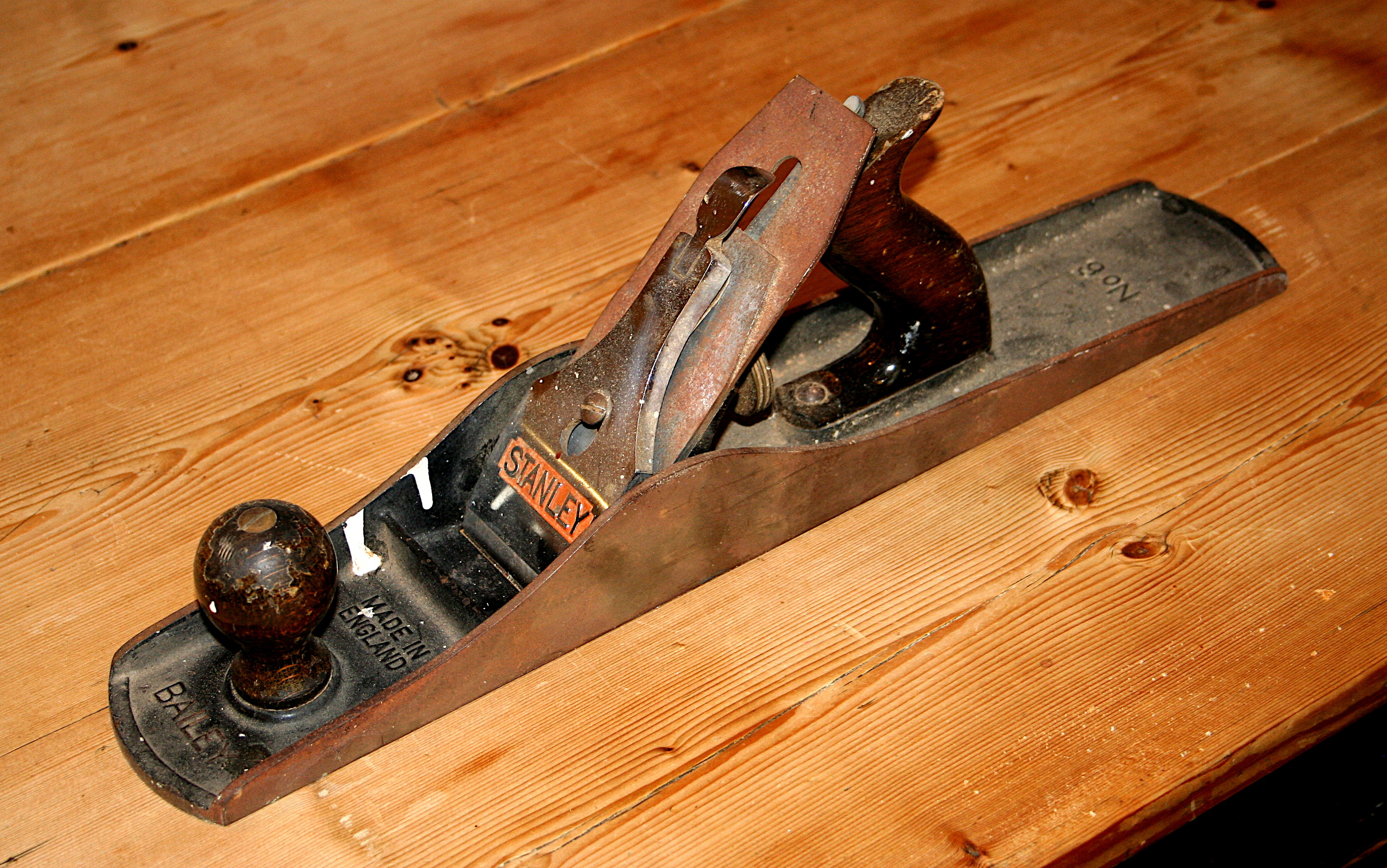
A hand-tool woodworking shop is not simply a room with tools in it. The layout, the bench, the lighting, and the floor surface all affect what is possible to do there — and how long it takes to do it. This article describes the practical decisions that go into setting up a shop oriented around hand-tool work, drawing on how established Canadian craftspeople have approached the problem in garages, outbuildings, and purpose-built structures across the country.
The Workbench
The bench is the single most important fixture in a hand-tool shop. Everything else follows from it. Two properties matter most: height and mass.
Height determines the mechanical advantage available for planing. A bench set too high forces the arms into a position that is weak for horizontal pushing forces. A bench set too low requires excessive forward lean that strains the back over long sessions. The traditional formula — make a fist, set the top of the bench at the first knuckle of the hand hanging naturally at the side — is a reasonable starting point. Planing heavy stock may warrant a lower bench; fine paring or layout work may warrant a higher one. In practice, most Canadian craftspeople building their own benches end up somewhere between 830 mm and 900 mm.
Mass is what keeps the bench from moving under planing loads. A light bench walks across the floor. A heavy bench — built from thick hardwood stock (beech, hard maple, ash) with a thick top, or with a solid torsion-box core — stays put. The traditional English bench design uses a massive solid-plank top, often 100 mm or more thick, in beech or elm. The Roubo-style bench (from eighteenth-century French cabinetmaking) uses a thick slab with an integrated leg vise. Both designs use mass as the primary anti-movement strategy.

Vises
A front vise (or face vise) mounts at the left end of the bench front for a right-handed worker and grips work held vertically for sawing, chiselling, and planing end grain. The parallel guide screw type — with both a threaded rod and a guide bar — is standard. Leg vises use a thick wooden jaw and a wooden screw; they are slower to operate but provide exceptional clamping force and are less likely to introduce twist into thin boards.
A tail vise (or end vise) at the right end of the bench works with bench dogs — cylindrical or rectangular pegs that project from holes in the top — to clamp boards flat for face planing. This is the arrangement most associated with European bench tradition. An alternative is the planing stop: a simple adjustable block at the far end of the bench surface that boards press against under planing force. Many experienced Canadian woodworkers use a planing stop rather than a tail vise, finding it faster and requiring less maintenance.
Floor Surface
Concrete is hard on the legs and feet over a full day of standing work, and it will destroy a chisel dropped on it. Rubber anti-fatigue matting in the primary work zone addresses the fatigue issue. Softwood plank flooring over concrete sleepers — a traditional workshop floor arrangement still seen in older Canadian farm workshops — provides both comfort and some cushioning for dropped tools. It also makes it easier to sweep shavings.
The floor in the planing area should be free of obstructions. Hand planing involves moving the body through a full step forward with each stroke; an unobstructed path of at least 1.5 metres in front of the bench end is needed to plane a typical 2-metre board without stopping and repositioning.
Lighting
Raking light — light arriving at a low angle across the surface of the work — reveals surface irregularities that overhead or diffuse lighting obscures. Traditional craftspeople positioned their benches near north-facing windows in the northern hemisphere for consistent, non-glare natural light. In a Canadian shop where natural light is limited for much of the year, supplemental fixtures positioned at bench level and angled across the work surface duplicate the effect.
Fluorescent strips mounted directly overhead produce a flat, shadow-free light that is excellent for visual inspection but poor for detecting high spots on a planed surface. The practical solution is to use overhead lights for general illumination and a small, adjustable task light positioned at low angle at the bench for surface inspection during planing.
Cold-weather considerations: Canadian winters create specific challenges for unheated or intermittently heated shops. Wood moves with humidity cycling, joints can loosen, and certain adhesives fail below 10°C. Craftspeople working through winter either heat the shop consistently (which is expensive) or schedule glue-ups and humidity-sensitive operations for warmer months. Plane soles and chisel handles benefit from a light oil coat before the shop is left cold for extended periods.
Tool Storage
Hand tools need to be accessible and protected from contact with each other. Edges that touch become dull. The traditional solution is a wall-mounted tool cabinet or open panel board with individually fitted holders — chisels in a rack with spaces between each one, saws hung from the spine rather than resting on the teeth, planes stored either on their sides or on a dedicated shelf with a low-friction surface.
A common configuration in established Canadian shops involves a large, shallow cabinet directly behind the bench. The cabinet door surface is used for frequently accessed tools (marking gauges, squares, pencils); the cabinet interior holds chisels in a fitted rack, small planes, and scrapers. Bulkier tools — large saws, router planes, shoulder planes — go on open wall hooks or on a dedicated shelf below bench height.
Shop Layout for Hand-Tool Work
Hand-tool work generates shavings and dust rather than the fine particulate of powered machining, but the volume of shavings from a day of planing is substantial. Clear floor space between the bench and any storage — at minimum 900 mm on all working sides — makes sweeping practical and prevents the slip hazard of compressed shavings on a hard floor.
In a small one-car garage shop (roughly 5.5 m × 5.5 m), the bench along one wall with a saw bench or secondary work surface perpendicular to it is a functional baseline arrangement. The door side remains clear for lumber entry and for long-board work that extends past the bench end. Sharpening equipment — whether water stones, oilstones, or a motorized grinder — is best positioned at a separate dedicated station rather than on the main bench, to keep sharpening debris away from finished work surfaces.
Updated: May 1, 2025